
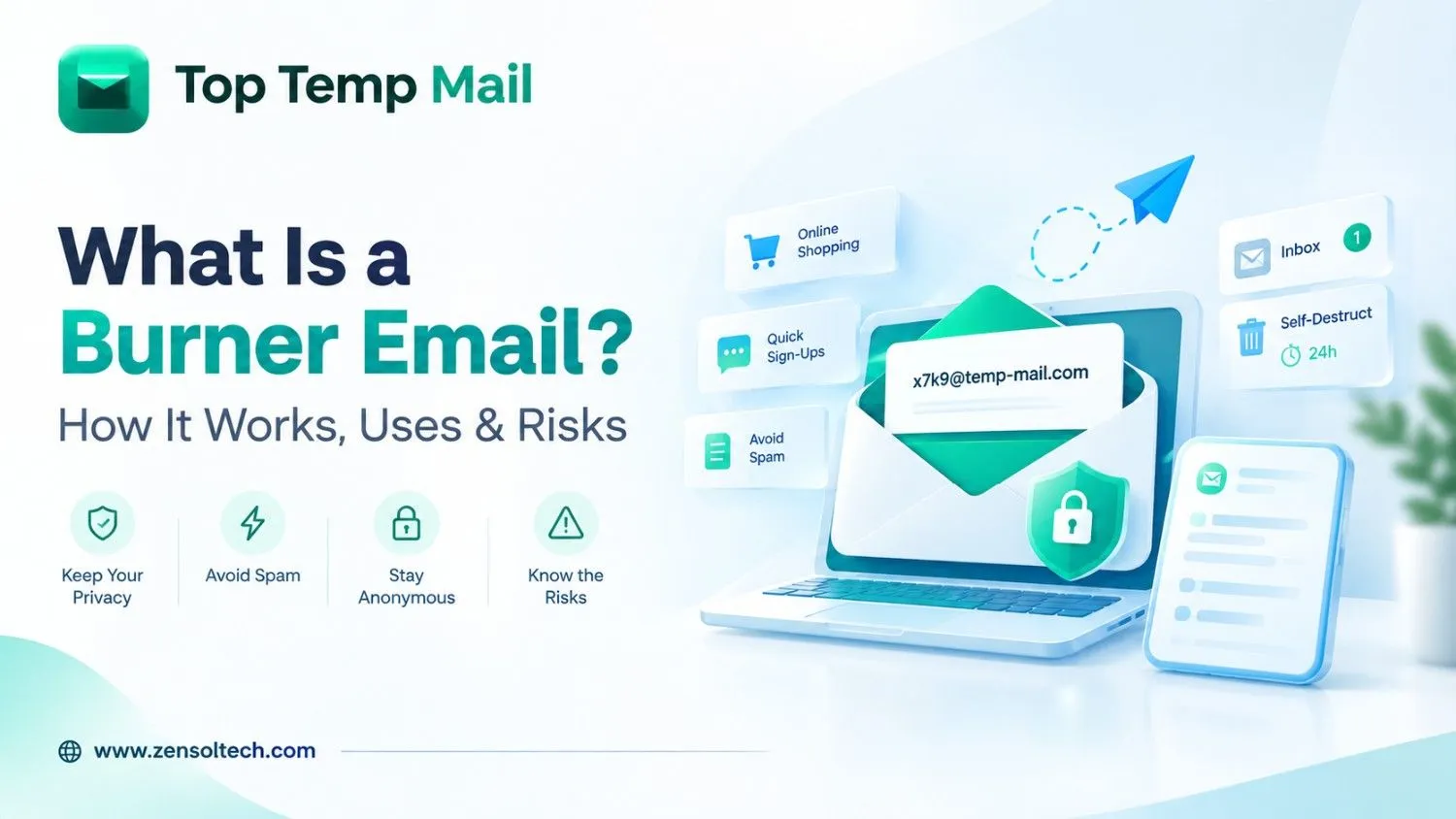
Signing up for a new website often means sharing your email address, even when you only need access once. If you want to keep these registrations separate from personal messages, a burner email can be useful. It provides another address for specific online activities without requiring you to share your primary inbox every time. However, not all burner emails work alike. Some remain available for ongoing use, while others expire automatically. Understanding how they work, their common uses, and their limitations helps you choose the right option.
If you only need an inbox for short-term registrations, learning how to create a temporary email address can help you get started without using your primary email.
What Is a Burner Email?
A burner email is a separate email address used for particular online activities instead of sharing your primary email address. It helps keep registrations, subscriptions, and messages from unfamiliar websites separate from your main inbox.
A burner email address can take different forms. It may be a separately managed account that remains active or a disposable inbox intended for short-term use. Its lifespan, message storage, and accessibility depend on the provider.
People commonly use burner addresses to manage online registrations, reduce unwanted promotional messages, and limit how often they expose their main email. However, using a separate address does not automatically make someone anonymous or guarantee that their messages remain private.
How Does a Burner Email Work?
A burner email works by providing a separate destination for incoming messages. Instead of entering your primary address during registration, you provide the alternative address and check its associated inbox when you need a message.
The basic process involves four steps:
- Obtain an address: Create a separate email account or use a disposable email service.
- Register online: Enter the address when a website requests your email.
- Receive messages: Check the associated inbox for confirmation links, notifications, or other correspondence.
- Continue or discard it: Keep using the address if the provider allows it, or stop using it when it is no longer needed.
If you need an inbox for short-term registrations, a temporary email generator can provide a disposable address without requiring you to create another permanent email account.
The important difference is how the address is managed. A separately created email account may remain accessible until you close it. A temporary inbox may expire automatically or lose its stored messages after a retention period.
Email forwarding, message deletion, address reuse, and inbox expiration also vary by provider. Always check these policies before using an address for something important.
Why Do People Use Burner Email Addresses?
The main reason people use burner email addresses is to separate online activities from their primary inbox.
For example, someone exploring a new website may want to receive its registration confirmation without giving the platform the address they use for personal or professional communication.
Other motivations include:
- Inbox organization: Keep promotional subscriptions and website notifications away from important messages.
- Reduced email exposure: Avoid sharing your primary address with every website you visit.
- Separate registrations: Manage different online activities through different addresses.
- Short-term access: Receive a confirmation message without creating another permanent account.
- Service testing: Evaluate registration and notification processes without using a personal inbox.
A separate address can reduce unnecessary exposure of your main email, but it does not prevent websites from collecting other information about you.
7 Common Uses of Burner Email Addresses
Burner emails are useful for various everyday activities, particularly when you do not need a permanent communication channel.
- Registering on unfamiliar websites: Use a separate address when exploring a new platform before deciding whether you want to continue using it.
- Accessing one-time downloads: Receive a resource confirmation or download link without adding another promotional subscription to your primary inbox.
- Testing online services: Try a new platform while keeping its registration messages separate from your regular correspondence.
- Managing newsletters and promotions: Use another address for discount alerts, newsletters, and marketing subscriptions so they do not crowd your main inbox.
People use disposable inboxes for different online activities, from registrations to managing promotional messages. Understanding how people use temporary email addresses can help you identify situations where a separate inbox is useful. - Joining online communities: Keep forum notifications and community updates separate from personal and work-related messages.
- Handling short-term registrations: A temporary inbox may be suitable when you only need a confirmation message for a limited activity.
- Testing email signup forms: Developers can use controlled test addresses to check registration flows, confirmation messages, and notification behavior.
These situations do not all require the same type of email. A reusable account is more suitable when you expect future messages, while a temporary inbox may work for a one-time registration. Always follow the website's registration requirements.
Are Burner Email Addresses Safe?
A burner email can reduce unnecessary sharing of your primary email address, but its safety depends on the provider and how you use it. It should not be treated as a guarantee of anonymity or secure communication.
Potential privacy benefits include:
- Keeping your primary email separate from unfamiliar websites.
- Reducing promotional messages reaching your main inbox.
- Limiting the number of services that receive your regular email address.
- Separating registrations and subscriptions for easier management.
However, there are important limitations:
- Provider access: The email service may be able to access messages stored in its inbox.
- Data retention: Providers may retain messages or technical information according to their policies.
- Shared inbox exposure: Public or predictable temporary addresses may allow other people to view incoming messages.
- Expiration: You may lose access to stored messages and verification links when an inbox expires.
- Website restrictions: Some platforms block known disposable email domains.
- Limited anonymity: Websites may still collect IP addresses, browser details, and information you provide during registration.
It is also important to understand three different concepts:
- Email privacy concerns who can access your messages.
- Online anonymity concerns whether your online activity can be connected to your identity.
- Account security concerns how well your account and login information are protected.
A burner email may help with the first concern in certain circumstances, but it does not automatically solve the other two.
Use strong, unique passwords and enable two-factor authentication where available. Avoid sending confidential information through an inbox you do not fully control.
Burner Email vs. Temporary Email: What's the Difference?
Burner email and temporary email are related terms, but they do not always describe the same type of service. A burner email can be a reusable account, while a temporary email is generally intended for limited use.
Feature | Burner email | Temporary email |
| Definition | Separate address for specific activities | Disposable address for short-term use |
| Typical lifespan | May remain active long-term | Often limited by provider policy |
| Account management | May have independent account access | Often requires little or no registration |
| Inbox access | Depends on account and provider | May be temporary or publicly accessible |
| Common uses | Separate registrations and subscriptions | One-time sign-ups and short-term messages |
| Reusability | Often reusable | Depends on expiration policy |
An email alias is another related option. It is an alternative address or address variation that directs messages to an existing mailbox. Unlike a separate email account, it may not have its own independent inbox.
For example, someone who wants to manage newsletters separately may prefer a reusable burner account or email alias. Someone who only needs a confirmation message may prefer a temporary inbox.
The best option depends on how long you need access and whether you expect to receive future messages.
When Should You Avoid Using a Burner Email?
A burner email is not appropriate for every online account. If you need ongoing access to important messages or account recovery options, use an email address you control long-term.
Avoid temporary or unsecured burner inboxes for:
- Banking and financial accounts: You need reliable access to security alerts and transaction notifications.
- Government services: Official communications may contain sensitive information.
- Medical accounts: Health-related correspondence requires an appropriate, secure communication channel.
- Password recovery: Losing access to the registered inbox may make account recovery difficult.
- Shopping accounts: Order confirmations, receipts, delivery updates, and return notifications may arrive later.
- Professional communication: Work-related messages require a dependable address.
- Long-term accounts: Important accounts should remain connected to an address you can access whenever needed.
Before using a temporary address, consider what could happen if you lose access to it. If you may need future verification, password resets, or account notifications, a permanent email account is the safer choice.
How to Choose and Use a Burner Email
Choosing the right service depends on whether you need a reusable account or a disposable inbox.
Before using one, consider these points:
- Identify your purpose: Decide whether you need an address for ongoing registrations or only a temporary activity.
- Check retention policies: Understand how long messages remain available and whether the address expires.
- Review inbox accessibility: Determine whether the inbox is private, shared, or publicly accessible.
- Follow registration rules: Some websites do not accept disposable email addresses.
- Protect important accounts: Use an email address you control long-term for banking, shopping, and password recovery.
If you only need an inbox for a short-term registration or confirmation message, a temporary email service may be more convenient than creating another permanent account. TopTempMail is an option to consider for this type of disposable inbox. Check its current retention and access policies before relying on it for messages you may need later.
Final Thoughts
A burner email is useful when you want to separate online registrations, manage promotional subscriptions, or avoid sharing your primary email unnecessarily. However, it does not guarantee anonymity or complete privacy. Choose an address based on how long you need access, understand its retention policy, and keep important accounts connected to an email you control. When a temporary inbox is sufficient, TopTempMail offers another option for handling short-term email needs.